The BigChilli
  • Home
  • News
  • Promotions
  • Features
  • Social Events
  • About Us
    • About Us
    • The team
    • Pricavy Policy
  • Contact us
  • Blog

My life in Newspapers

5/3/2020

Comments

 
Picture
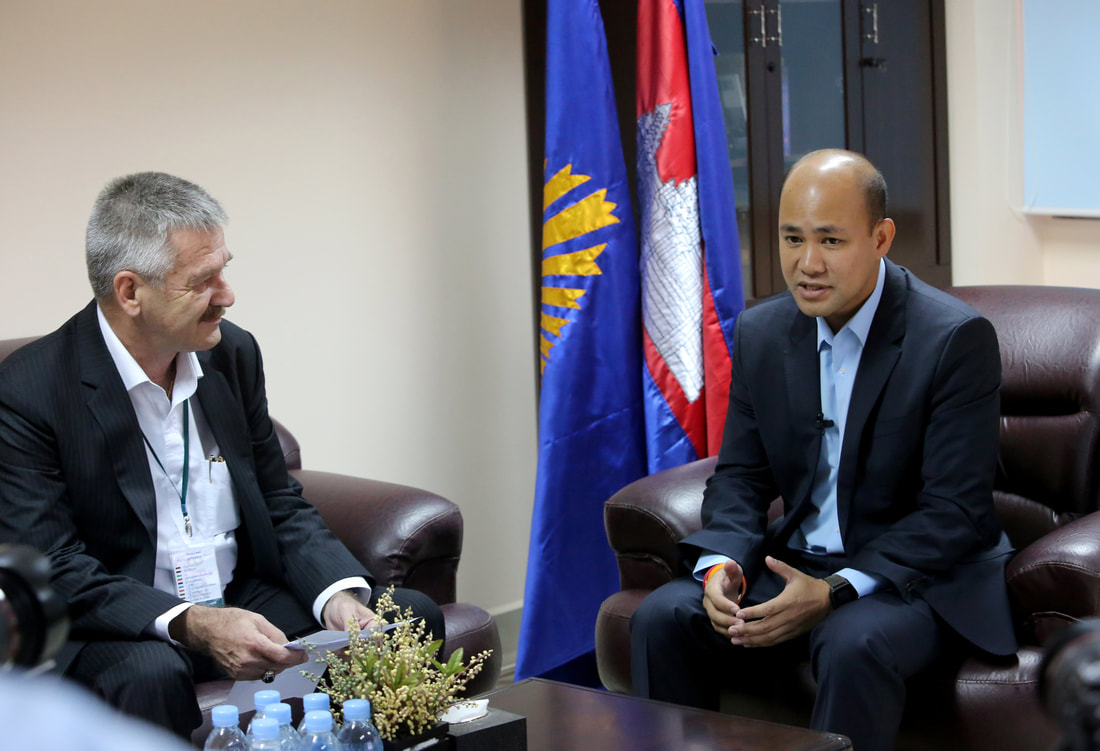
Interviewing Hun Many, Prime Minister Hun Sen's youngest son, in his office at the Council of Ministers in Phnom Penh.
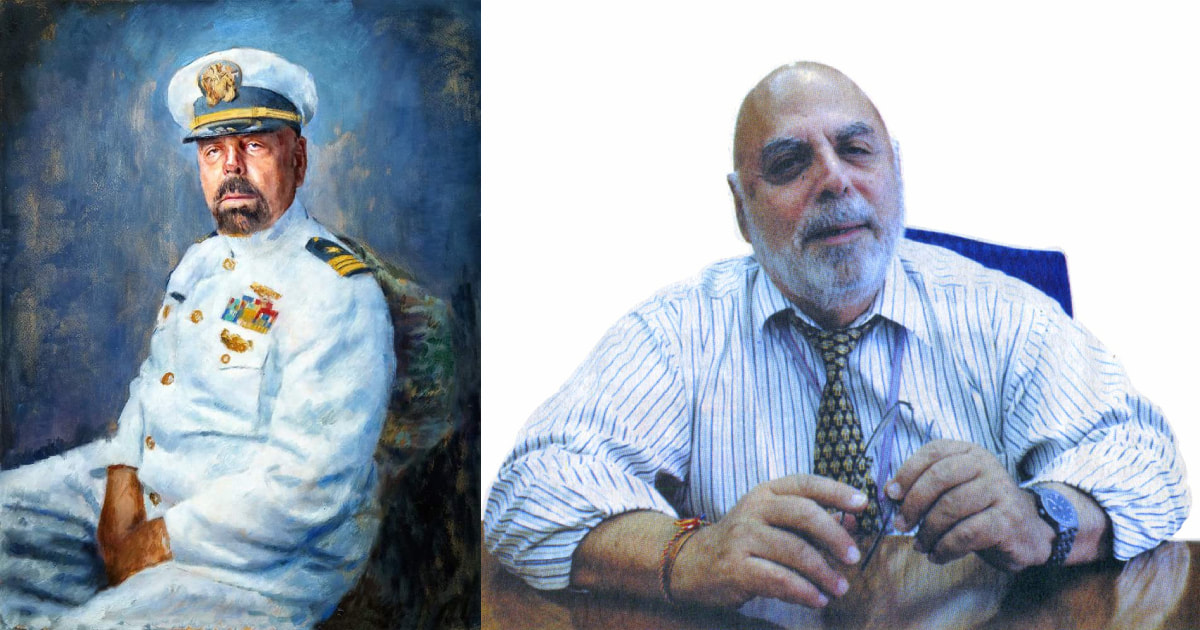
Alan Parkhouse is one of the most respected senior journalists in the region. Fellow writer Scott Murray recently caught up with ‘Parkie’ to talk about his many experiences in a long and eventful career.

Alan Parkhouse is one of the most respected senior journalists in the region. Fellow writer Scott Murray recently caught up with ‘Parkie’ to talk about his many experiences in a long and eventful career.
 
Alan was born in Brisbane, Australia, in 1954. He grew up in Grafton, a town of about 30,000, in northern New South Wales. He left Grafton High School at 15 to start an apprenticeship as a hand and machine compositor, or hot metal printer, at the Daily Examiner, Grafton’s local newspaper since 1859. Later, he went on to the Sydney Graphic Arts College as part of his apprenticeship.
 
Otherwise, he studied at the school of hard knocks. Alan switched to journalism in the 1980s and became the editor of two suburban papers in Sydney before moving to the bigger national dailies. He has worked in newspapers in Australia, Thailand, England, Cambodia and Hong Kong. As well as the two suburban newspapers in Sydney, and he has been the editor-in-chief of The Phnom Penh Post and Khmer Times in Cambodia and the acting editor of the Sunday Bangkok Post roughly 10 times while the editor was on holidays. 
Read More
Comments

Meet the law enforcers who handle the “complex cases”

25/2/2020

Comments

 
Picture
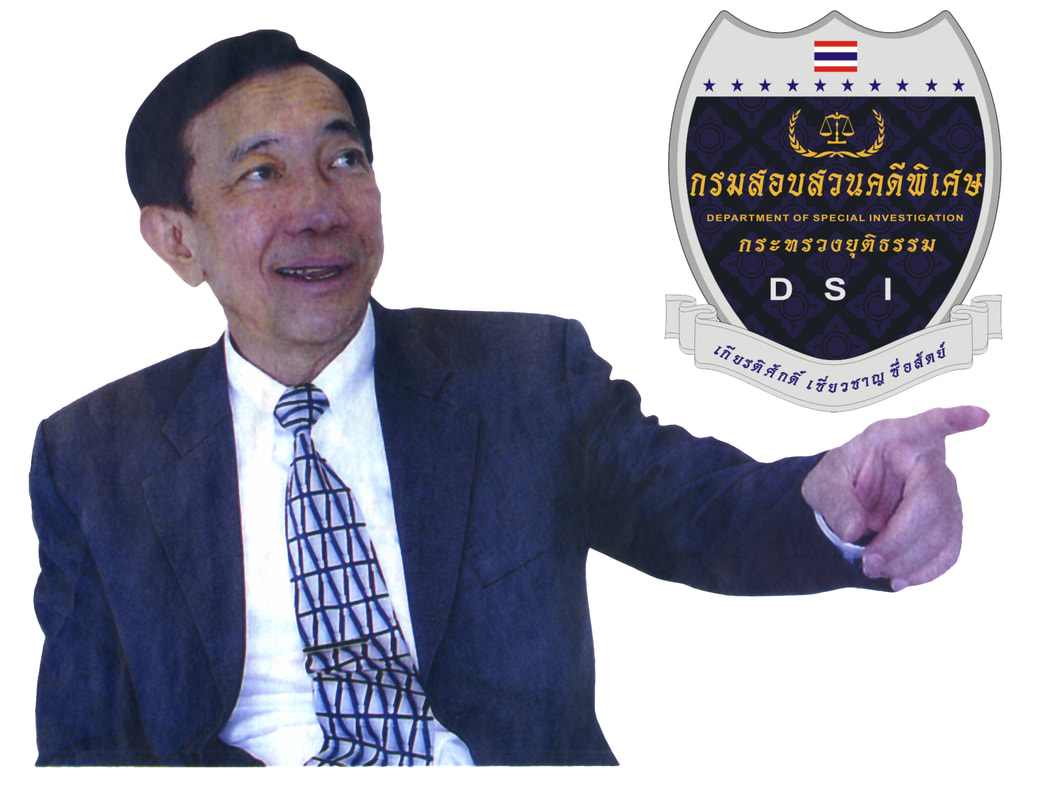
Police General Sombat Amornivat, January 2006.
As head of the Department of Special Investigations, Police General Sombat Amornvivat knows that he and his team have to be at the top of their game at all times

When he was a young police captain attending an 11-week course at the Federal Bureau of Investigation’s National Academy in Quintico, Virginia in 1973, Pol Gen Sombat Amornvivat never imagined that one day he would lead a similar agency in Thailand, the Department of Special Investigation (DSI).
 
“I consider it a very special assignment because we handle many important and high profile cases. While the police deal with general crimes, the DSI targets more complicated cases, especially those dealing with financial crimes which are too complex for ordinary police work to bring about a successful prosecution. A classic ‘difficult’ case was the collapse of the Bangkok Bank of Commerce,” he explained.

The DSI was established in October 2002 primarily to create a strong, proactive law enforcement agency that would focus on national security and also transnational and organized crime.
 
Pol Gen Sombat has been director-general of the DSI since his move from the Royal Thai Police in January 2004. The DSI now has only one office in Bangkok but there are plans to expand to other regions of the country. “We have got here many highly qualified officers chosen from the ranks of police, customs and revenue departments, as well as prosecutors, accountants and lawyers from a variety of other government departments.”
 
Pol Gen Sombat said that the biggest problem for the DSI is training. “Some of our recruits don’t know how to investigate, so we have to train them. We have a close relationship with foreign investigation experts in the United States, the United Kingdom and several other countries. They come here to instruct our officers,” he revealed.
 
Pol Gen Sombat dismissed a criticism that was rife in the agency’s early days: “Some officials didn’t like the DSI because they thought it overlaps other agencies. They still had an old working culture mindset. Things are better now and we cooperate very well.”
 
He also admitted that in the beginning some officers thought that they were better than other law enforcement people because they were selected to the DSI, but that situation has also been resolved.
 
Pol Gen Sombat highlighted two controversial cases currently being investigated by the DSI. First, the disappearance of human rights lawyer Somchai Neelaphaichit, who had defended several suspects in connection with the violence in the restive South and who went missing on March 12, 2004. The second case was the murder of environmentalist Charoen Wat-aksorn, who was gunned down on June 21, 2004 after testifying before a Senate committee about attempts by some influential people to grab public land. He was instrumental in pressuring the government to scrap plans to build the Bo Nok power plant in Prachuap Khiri Khan province.
 
Pol Gen Sombat is well aware that the handling of both cases has received a great deal of attention, and criticism, from local and foreign media as well as human rights organisations.
 
“I can assure you that everyone at the DSI is doing their utmost to solve both cases,” he said.
 
The DSI was assigned to investigate the Somchai case about five months ago because it was a priority case that the police were having difficulties with.
 
“I am really trying to solve this case and I am confident that we will succeed. But a lack of evidence makes the investigation very difficult. You see, Somchai’s body has not even been found yet.”
 
As for Mr Charoen, he added, “we have arrested several people, but his wife is not quite happy and still wants us to arrest more. We have no evidence on which to do so, and this has disappointed her. We work according to the evidence, and not because of pressure from any party. We do our best but we have to follow laws, regulations and to respect human rights.”

Read More
Comments

Revisiting great stories of the past – Part 9 David Lyman: Lawyer in the ‘eye of the hurricane’

20/2/2020

Comments

 
Picture
Veteran correspondent Maxmilian Wechsler recalls some of his most interesting and exclusive assignments from the past two decades.
FROM THE YEAR 2006
The head of Thailand’s oldest and biggest independent law firm, David Lyman has found peace and serenity in his adopted home
As a youngster, David Lyman didn’t want to become a lawyer as his parents and many of his relatives were. Instead he joined the US Navy, but couldn’t escape his destiny. While debating whether or not to stay in the Navy,he decided to try studying law, and said to himself after the end of the first semester: “This is what I really want to do!” Four decades later he can still say, “I never regretted it.” 

Mr Lyman is now Chairman and Chief Values Officer of Tilleke & Gibbins International Ltd., which is the oldest and biggest independent law firm in Thailand. With 265 employees, the company serves more than 5,000 corporate and business clients from over 100 countries. The clients include national government agencies, banks, airlines, shipping companies and fashion houses.
 
“The company was established in 1890 by a Ceylonese, Mr William Alfred Tilleke. It was bought by my father in 1951 and I took over after his death in 1984,” Mr Lyman said. 

“I came to Thailand for the first time with my parents in 1949, when I was 12 years old. They had decided to live here for good because it was a very friendly place – as it still is today – in comparison with other countries in the region at that time, when wars of independence raged in many nations around Thailand.
 
“My father compared Thailand to the ‘eye of the hurricane’ because the eye is always calm, sunny, no wind blowing while the storm rages all around. Thailand is still a land of calm and sun,” Mr Lyman said.
 
“Of course,” he continued, “I know what is happening in the South and so on, but generally speaking the Thais are a quite accepting and open society. 

“They are open to new ideas. I have learned how to appreciate their culture and how to function within it, just as my parents did. I have also adopted the ‘Thai way’ of doing things. I try to live by a code of ethics, stay out of local politics, be honest, work hard and do my best to understand how the system works, because you have to work within the system. And that’s how we have developed a world-wide reputation.” 

David’s parents made substantial contributions to the Kingdom. Mr Albert Lyman was a founder of the American Association of Thailand (now the American Chamber of Commerce) and also a founder and chairman of the Bangkok Stock Exchange (now the Stock Exchange of Thailand).
 
Mrs Freda Lyman received the Most Noble Order of the Crown of Thailand 5th Class in 1961 for her work with the Foundation for Crippled Children and was the first foreign woman to be decorated by His Majesty King Bhumibol Adulyadej.
 
“We have had a good relationship with virtually every government because we don't involve ourselves with political matters,” Mr Lyman said. “Of course we have to understand the political situation and to know the politicians. I have known some of them since we were all young. We grew up together.
 
“I am not concerned about ‘good or bad’ government. All my concern is that this country must develop. The Thai people want to see it develop. There’s a saying that ‘Thailand succeeds despite governments’. It succeeds because of the nature of its people and their culture. And as I said, it is the ‘eye of the hurricane’. It has a peace and serenity that you can’t find anywhere else in Asia.”
 
Business-wise, Mr Lyman said that there was not much competition here until 1965. “Now, there are a lot of foreign-owned or foreign-oriented firms as well as the Thai lawyers who were trained in Thailand or overseas, and lawyers who left their firms and established themselves here. There are fine lawyers in this country. Good client service is a key to a successful practice. Many law firms can do the same things we do, and we can do the same things they do,” Mr Lyman stressed.
 ​

Read More
Comments

Profile: Peter Brongers

18/2/2020

Comments

 
Picture
Popular former Bangkok resident explains why he is happy to have moved to Phnom Penh
Name: Peter Brongers.
​
Age: 62.

Born: in Groningen, The Netherlands.

First family and today: Since many years with my lovely wife Palida Janthewee and our two Dobermann dogs.

Education: MBA, ME.

Languages: Dutch, English, German, French, Spanish, Thai, Khmer.

Employment background, including Thailand: 
I started my career at Fokker Aircraft in The Netherlands. The company went bankrupt and I moved to Heidelberg Printing Presses as corporate Planner. I came to Thailand in 1995 initially as Managing Director of Euromill Engineering, then moved to Thai Scandic Steel. Before I moved to Cambodia, I was the CFO of Topaz Inc, the last Thai company listed on the AMEX.

What do you do in Cambodia – and how long have you been in your present job? 
I came to Cambodia to build my own beer brewery, Kingdom Breweries. It came out of some brainstorming about opportunities in the region with my friends Patrick Davenport and Jeremy King. We found an American private equity fund prepared to put most of the money in. We were a couple of years too early with bringing a high-end boutique beer to the market. We were also limited in our investment.
 
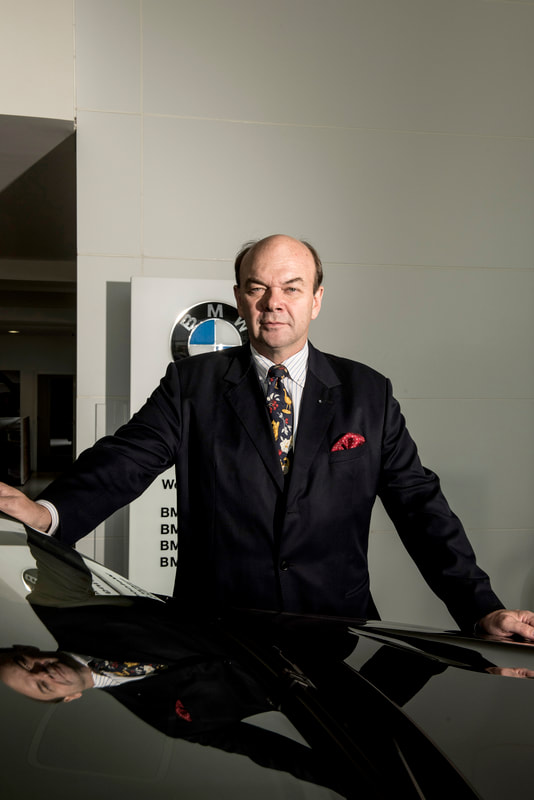
In the end we were too big and expensive for a boutique brewery and too small to compete with the big boys – even though in the first year we passed Tiger and Heineken in number of cases sold in Phnom Penh. Ultimately it was not sustainable. I then moved to the Royal Group as Senior VP and became the Managing Director of its subsidiary BMW Cambodia and Executive Director of KFC Cambodia.
 
In addition I am the president of the Dutch Cambodia Chamber of Commerce and the Vice President of the Cambodian Tourism Federation. I am also heading the Cambodian Chapter of the Chaine des Rotisseurs. Until recently I was the President of the Cambodian Automotive Federation.

Where do you live, and what is it like? 
For the past eight years we have lived in a beautiful villa close to the so-called Russian market. When we moved there the whole street was quiet, only houses, not one car parked outside at night. Now only two houses are left in the street, the rest have been turned into apartments, a university and a couple of hotels. Not quiet anymore!
 
How long have you lived in Cambodia? 
We moved to Cambodia in 2008. I have been coming here since 1994, initially to sponsor the construction of the Don Bosco school. It was the first vocational school in Cambodia, probably the first real school after the Khmer Rouge.
 
As Euromill we donated the steel structures. When the doors opened for the first semester there were some 3,000 kids queuing up to get one of the 300 available places. Now there are 14 Don Bosco schools over the country. Over the years my Rotary Club Bangkok South did many projects in Cambodia and we came over quite a few times to assist.
 
What’s keeping you in Cambodia? 
There are a lot of opportunities in Cambodia. The infrastructure, industry as well as social structure were all destroyed during the Khmer Rouge and it has taken decades to rebuild. Before the KR there was quite a lot of industry, now even milk is imported either from Vietnam or from Thailand. With a population of around 16 million there is still a lot to be done.

Read More
Comments

Meet the Chef: Mr Vincenzo Gatti- Executive Chef

26/12/2019

Comments

 
Picture
Chef in focus
​
Mr Vincenzo Gatti
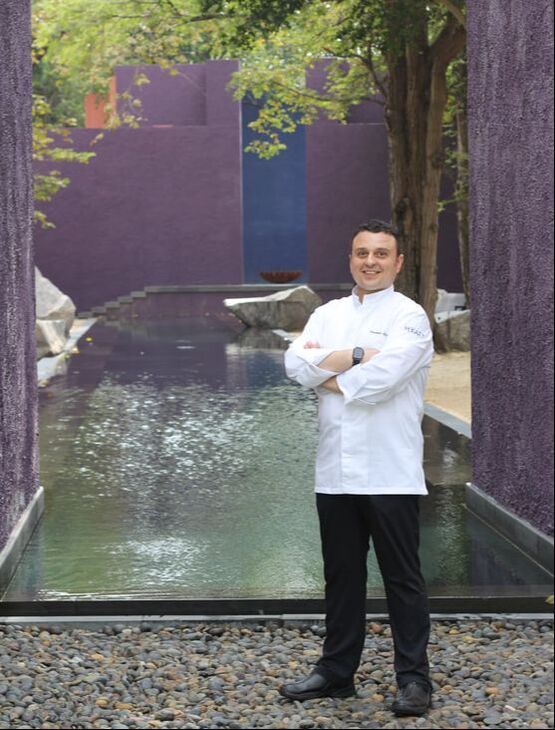
Chef Vincenzo, who is from Puglia, Italy, brings with him 20 years of culinary experience gained across many countries, with different positions in many kitchens of five-star hotels. He began his culinary career in Italy, after which he worked in various cities across Europe, including Amsterdam and Cologne. Within a year of moving to Dubai, his team and the Certo Restaurant were awarded ´Best Italian Restaurant in Dubai´. Chef Vincenzo is no stranger to the Hyatt family, having previously worked at Park Hyatt Guangzhou, China. Prior to joining Hyatt Regency Hua Hin, he was the Executive Sous Chef at Grand Hyatt Seoul, South Korea.
Contact: 032 521 234, email: [email protected] or visit website www.hyattregencyhuahin.com

Read More
Comments

Profile: Joe Sloane- Bangkok's famous sausage maker

24/12/2019

Comments

 
Picture
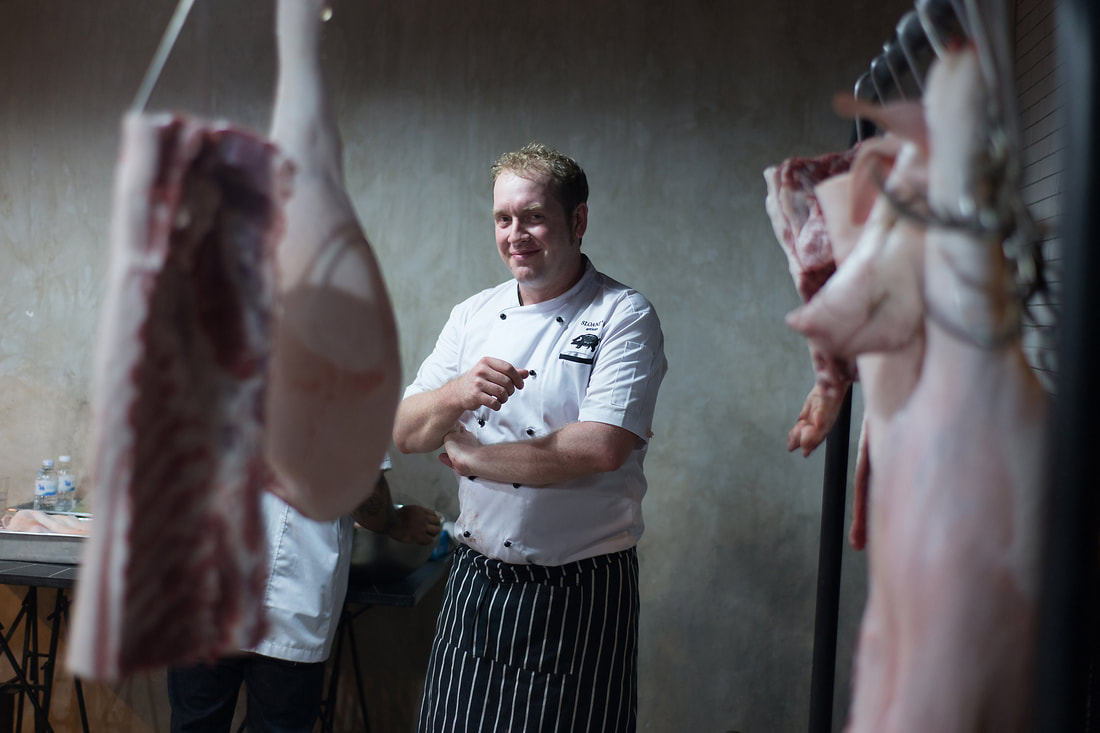
Starting with a single pig ten years ago, selling his products in local farmers’ markets and to friends, Joe Sloane has grown his food business into one of Thailand’s leading and most recognizable suppliers of artisanal meat products.
 
The line-up includes sausages, bacon, hams, pies, burgers and a range of aged goods like salamis and chorizo. Today, ‘Sloane’s’ gets through four tons of meat a week, all from “high welfare” sources dotted around the country which UK-born Joe visits on a regular basis.
 
Most of his beef, for example, is from farms in Korat, while the pigs are sourced from a family cooperative in Ratchburi, and chickens from Khao Yai. Other suppliers are based in Sisaket, Chantaburi and Chiang Rai. All supplies are processed by 40-strong staff in the company’s Bangkok factory.
 
In addition to supermarkets popular with Thailand’s expat community, Joe supplies a number of leading hotels such as Hyatt, Marriott, St Regis, Kempinski, Anantara, Sheraton and the Minor Group as well as outlets like Starbucks.
 
In fact, it was Starbucks that helped to give his business a major boost when it added Sloane’s Cumberland sausages with Gouda cheese and egg on its menu as a breakfast special. The product was a surprise hit and almost overnight his Cumberlands went main stream.
 
Sloane’s goods are also available in restaurants in Luang Prabang, Laos, while plans to export to Singapore were shelved because the island republic only allow heat-treated pork products. Here in Thailand, some restaurants now make a point of highlighting the ‘Joe Sloane’s’ products as a sign of superior quality menu items.
 
To make his recently introduced range of pies, which include steak and kidney, steak and stout, mince and onion, chicken and ham, chicken and asparagus, traditional pork, cranberry and gala, Joe uses a traditional pie making machine from John Hunt of Bolton, a huge 80kg cast-iron contraption, some 60 years old, which he brought into Thailand in sections from the UK.
 
In terms of price, Joe reckons his products are roughly 20% more than the competition – “typically 250 baht against 290 baht for Sloane’s and 600 baht against 500 baht for other products.” 

Read More
Comments

Gastronomique Curator – how Chef Jerome Coldefy puts on spectacular private dining events

12/12/2019

Comments

 
Picture
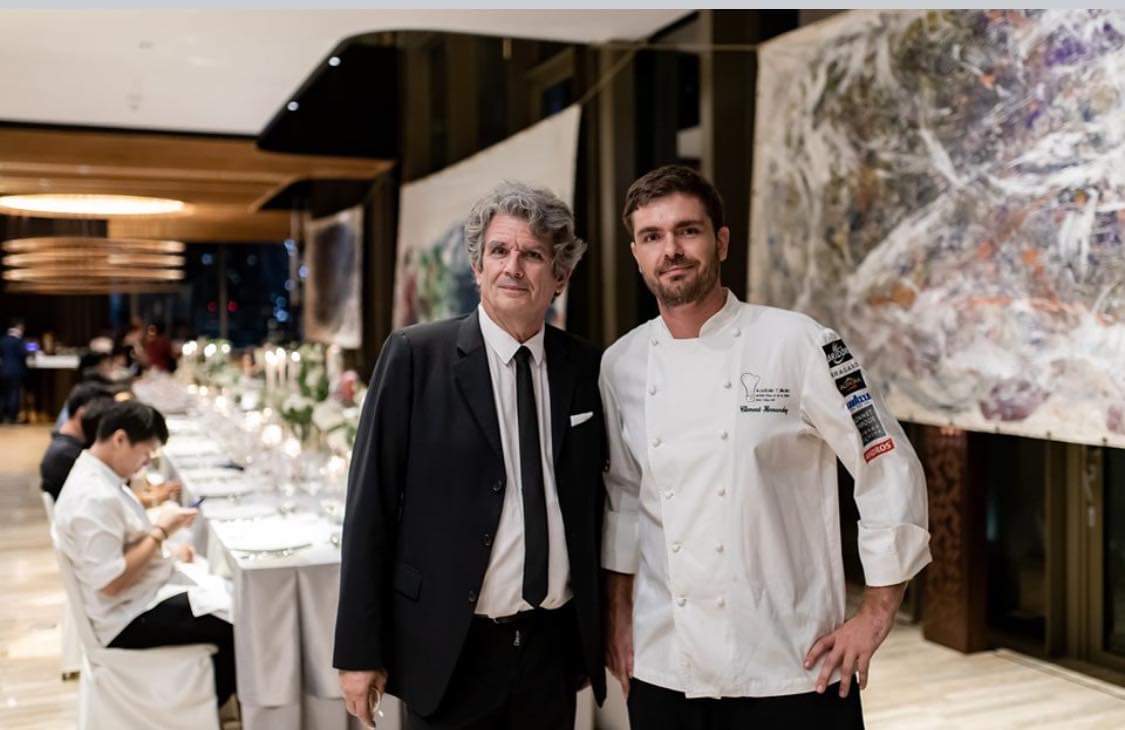
Jerome Coldefy is typically French, a full-on city man from Paris, a great chef and art lover, with a passion for cooking who enjoys combining food and art. Now living in Bangkok, which he loves for the variety of food available here, Jerome caters for private dinners highlighted by his gourmet cuisine. 

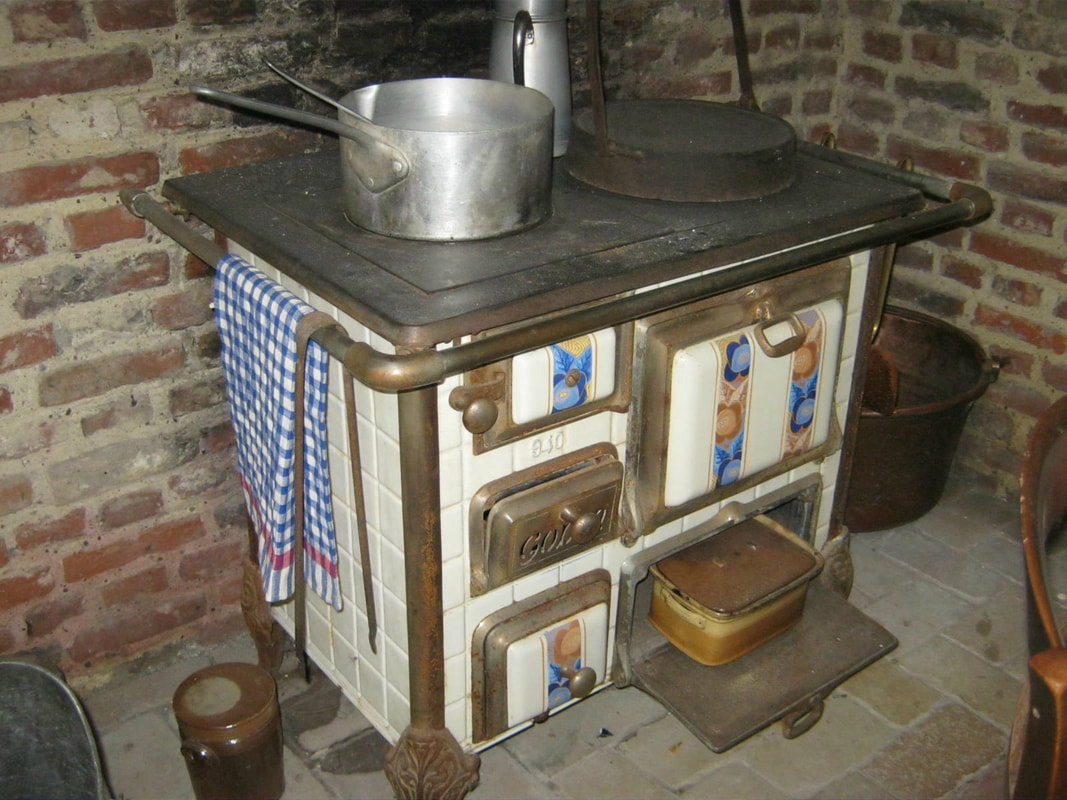
From an early age, he visited museums like the famous La Prada in Madrid, the Louvre in Paris, the Metropolitan of Art in New York, and the British Museum in London for inspiration and education. And he loved nothing more than spending time in the kitchen watching his grandmother and mother cooking. The kitchen was old fashioned; no gas or electricity ovens, only an AGA, he remembers.
He watched carefully his grandmother when she prepared long cooking dishes and French specialties. Today he still recalls the smell of the different dishes she prepared. “It’s kind of ‘Madeleine de Proust,’” he explains. “The aromas take you back to your childhood again.”

He frequently accompanied his grandma to the local market to buy fresh vegetables and fruits. “There were so many beautiful ingredients and I just loved it,” Jerome says.

Jerome started working in hospitality at a young age and at an age of 22, was appointed hotel manager for Sofitel in Grenoble, France. Since then he has always been involved in the food industry and gastronomy, responsible for many official dinners.
Picture
source by pinterest

Read More
Comments

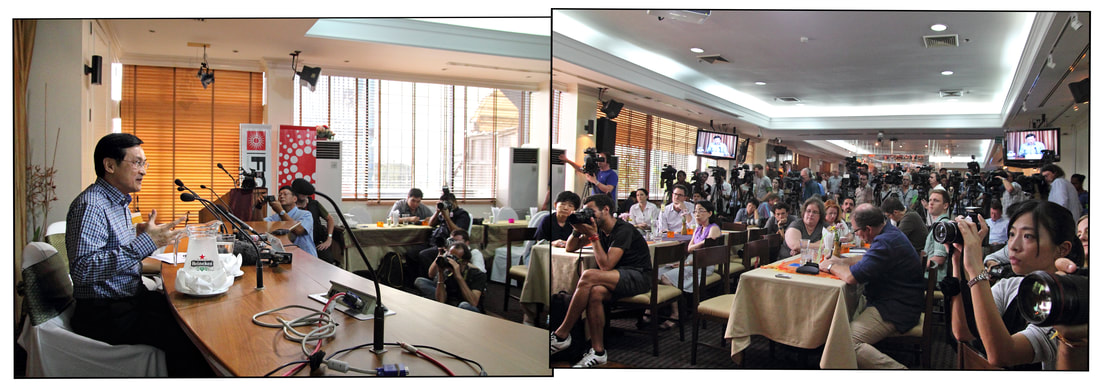
The inside story of the FCCT Bangkok’s historic media hub – making and breaking the news for more than 60 years

20/11/2019

Comments

 
Picture
Picture
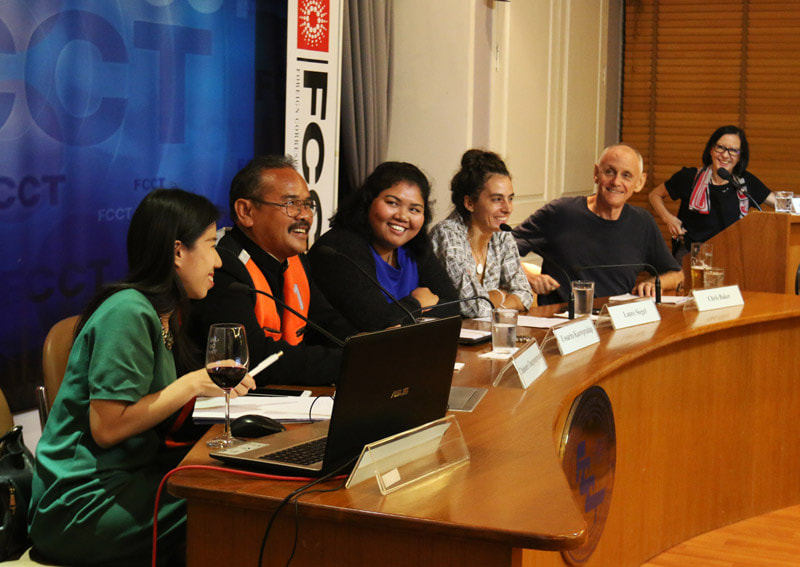
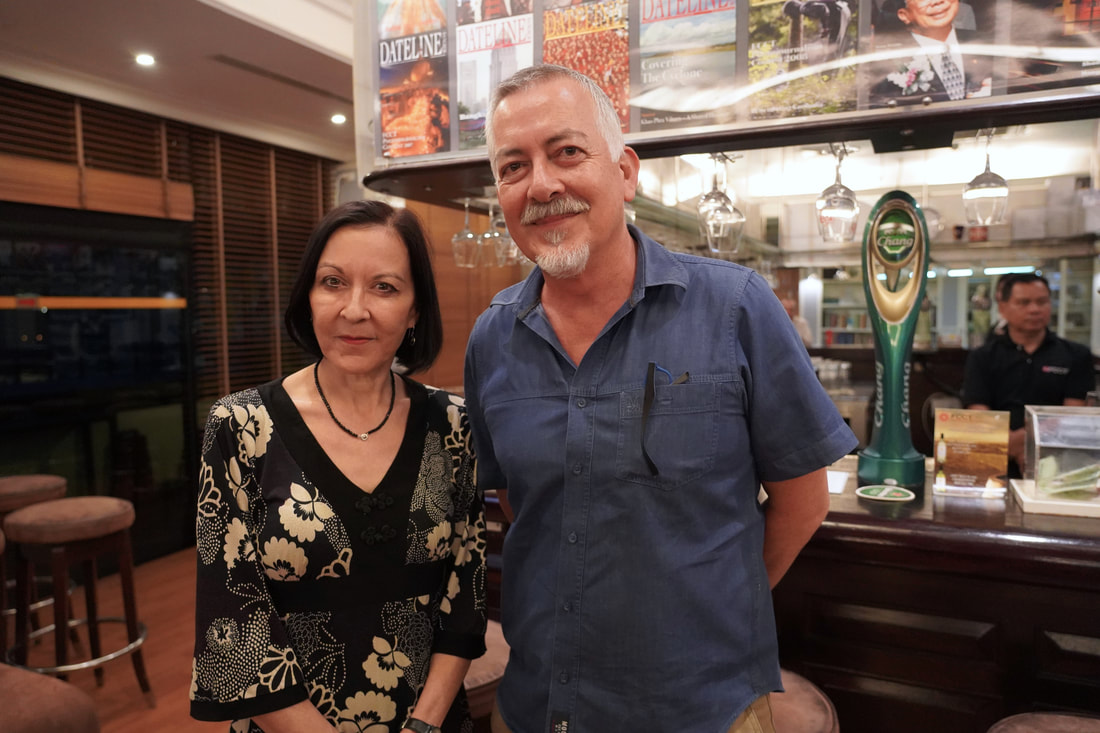
One of the great institutions of this country, the Foreign Correspondents’ Club of Thailand (FCCT) has a long and fascinating history filled with the exploits of legendary journalists and photographers who risked and even gave their lives to keep the world informed of events in Southeast Asia. 

Now in its seventh decade, the club is a magnet for a much wider audience with members from all walks of life enjoying some of the hottest debates in town, presentations, book launches and congenial gatherings. It also continues to play an important role in the quest for freedom of speech and other media issues.
​

By Dominic Faulder 
Picture
The informal origins of the Foreign Correspondents’ Club of Thailand (FCCT) date from the mid-1950s, when a group of correspondents and media types gathered at Mizu’s Kitchen on Patpong Road.
 
Back then, airlines, trading companies, restaurants and other businesses dominated the area - a far cry from today’s garish and moth-eaten nightlife haunts. Mizu’s survived until very recently with its tablecloths stiffened by the sizzling juices of countless Sarika steaks, and is currently undergoing refurbishment.
 
The history of the FCCT is the sum of its members – a long list of characters who have played fascinating parts, large and small, in the reporting of Southeast Asia. The FCCT’s principal founder, Jorges Orgibet, rolled up in Thailand with the US Office of War Information at the end of World War II and set up the US Information Service (USIS) office. A journeyman journalist and public relations man who in 1953 served as the first bureau chief for the Associated Press (AP), Orgibet never left. He passed away in 1986 at the Bangkok Nursing Home.
 
Alex Wu, a Chinese-language editor with USIS, and Prasong Wittaya of United Press, who served several terms as the club’s president, also played key roles.
 
Alexander MacDonald, the station chief after the war of the US Office of Strategic Services, the forerunner of the Central Intelligence Agency, founded the Bangkok Post in 1946. However, he was chased out of Thailand by 1955 before the FCCT really got going.


Read More
Comments

The Foreign CORRESPONDENTS CLUB that’s not just for reporters

20/11/2019

Comments

 
Picture
Who can join the FCCT and what are the fees?
Anyone can join. About a fifth of the membership are correspondents and journalists. The remainder range from diplomats to NGO workers, retirees to students. The fees vary according to category but the highest rate – for associate members – is still only baht 6,500 per annum.

How many members?
The FCCT has over 800 members.

What are the approximate membership demographics?
Ages range from 16 to 96 originating from most corners of Earth.

What are the main benefits of FCCT membership?
Free entrance to almost all events; 25% discount on F&B of good quality and reasonably priced; welcoming staff; great networking; informative and interesting events; outdoor terrace; access to books written by members; excellent working space on the fly.

What events does the FCCT host?
The FCCT usually hosts three events a week including Monday night documentaries, Wednesday night panel discussions, as well as various report and book launches. Topics range from politics (local, regional and international), to business, human and animal rights, and environmental issues.There are also more cultural evenings, sometimes built around a particular author or noteworthy individual. The FCCT also hosts lighter events: sake and craft beer tasting, plays, and tango nights, and has a children’s hour on Friday afternoons.

Celebrities
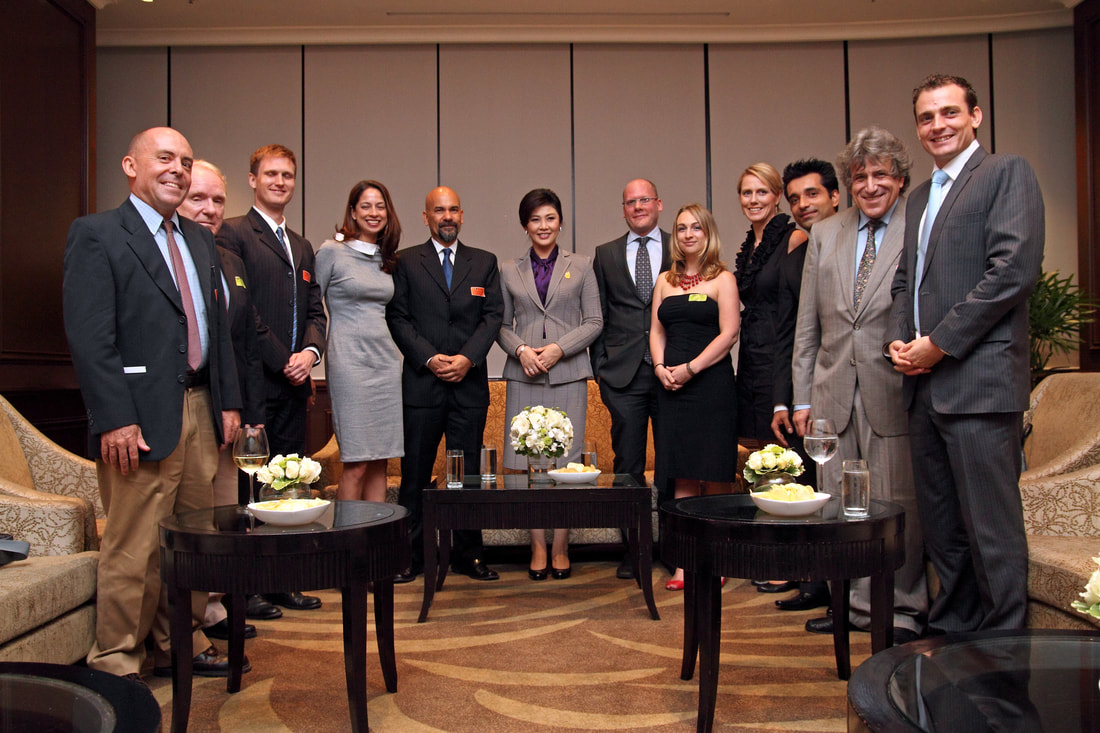
Over the course of over 60 years, the FCCT has welcomed countless famous speakers including world leaders, politicians, pundits, adventurers, writers, actors, directors, activists, sports people, and more – and many of their pictures can be viewed in the entrance area.

Reciprocity
The FCCT has reciprocal arrangements with 29 clubs around the world including the FCC Hong Kong, FCC Tokyo, the National Press Club in Washington, and the Frontline Club in London.

Who’s in charge?
Good question. The FCCT is managed by an executive board elected each year with no member allowed to hold the same position for more than two consecutive years. The main board forms committees to manage various aspects of the club including programmes, publicity, finance, membership, and professional matters. Daily operations are managed by the general manager and his friendly staff.

Read More
Comments

Profile: Agneta de Bekassy

12/11/2019

Comments

 
Picture
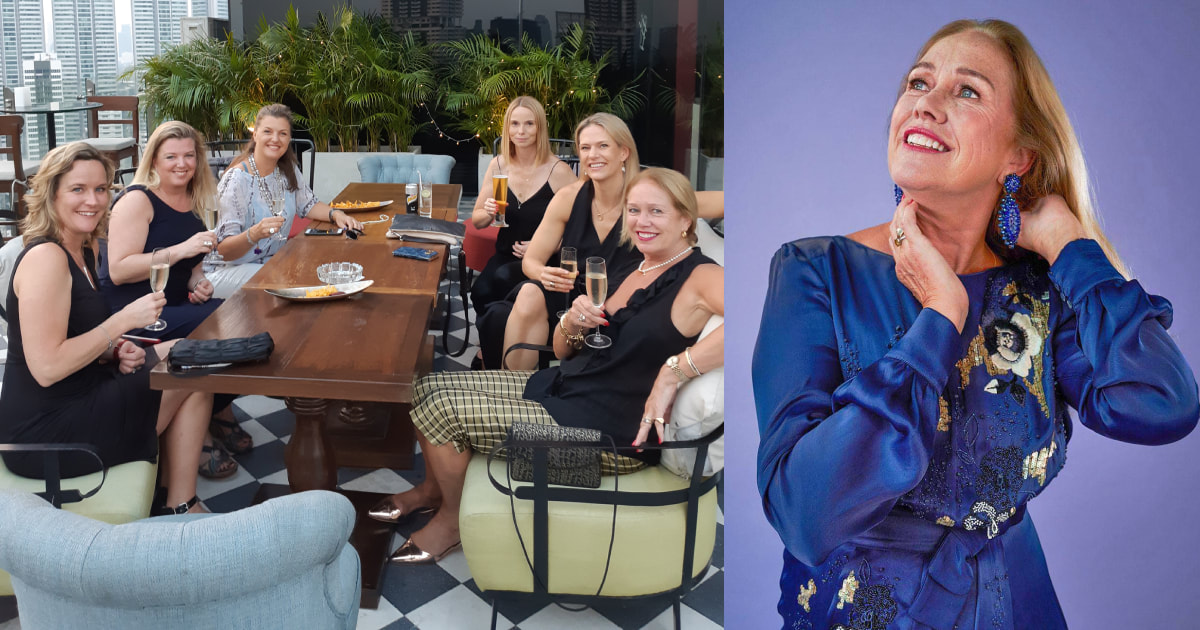
​Long-term expat from Sweden talks about competing in the Miss World competition, her encounter with an Arab who wanted more than just her beauty, an alcoholic former husband, and her exciting life in Bangkok.
Name: Agneta de Bekassy.

Born: In a relatively small town Södertälje, south of Stockholm. (5th of February 1955, a good wine year) Later, my parents moved to Stockholm where I went my first years to school.

Family: My father is an engineer and my mom a secretary. When I and my 4 ½ years younger brother were small, mom mostly stayed at home looking after us. She was born to be a mother. When I was seven, we moved to Gothenburg on the West coast.

Education: I went to a private school, Göteborg’s Högre Sam skola, not very big at that time and we called our female teachers “Aunt” and the males “Senior Master”. It was hard discipline and the principal (headmaster) greeted us every morning and always controlled us, checking that we were on time, properly dressed and had our books. He was a real gentleman and we all liked and respected him.
I studied lots of languages like Latin, ancient Greek and Russian. In Sweden our first foreign language is English, it’s obligatory. My headmaster was an archeologist and he got me interested in Ancient Civic Life, which I went on to study at the University of Gothenburg. I also picked languages, as I was a zero in math.
I went on to the University of Lund, south of Sweden, when my parents moved to Malmö. Here I took Art History. I have always been very interested in art and music.

University life and part-time model During my studies, I worked in my spare time as a model to earn pocket money. I often modeled at the fashion weeks in Copenhagen. It was a fun extra job and quite well paid.
I also went to Paris during six months where I worked for a Danish photographer, Gunnar Larsen. He was, at that time, publisher and owner of a beautiful fashion magazine Le Jardin de Mode.
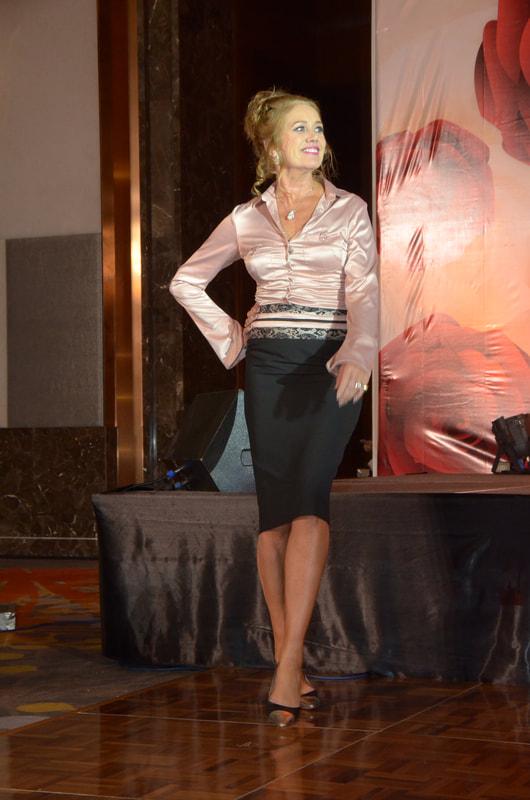
During my stay in Paris, I was asked to represent Sweden at the Miss World Contest, which took place in London, we’re talking 1975. It was a big thing at that time. We were 68 young women participating. It was a time when London had a lot of turmoil and we girls were watched over very carefully. It was a nice and fun experience, but to be honest, I think there’s a lot of politics behind those contests.
Everybody wanted the Miss Germany to become Miss World that year, but instead a girl from an island – I think it was Aruba – who won. No one expected her to win, but she brought a great gift to be auctioned for charity, and in my mind that might have helped her becoming Miss World (my thoughts).
Picture
My first job and the shocking experience in London with an Arab with ill intentions
​
My first job was as a model, but I also worked during vacations at a shopping mall, selling household utensils, much less glamorous.
I was with an agency in Gothenburg when a strange thing that once happened to me. Many of my model colleagues were sent to London for a casting and all of them returned to Gothenburg with jewelry and design clothes. I was wondering why I wasn’t asked to go and I begged the boss to send me. She refused for a long time, without saying why. I nagged her and eventually she told me to pack my bags and leave. At Heathrow airport in London I was picked up by a dark green Rolls Royce with an elderly driver. You can imagine how I felt…such luxury.
During the drive into the city, the driver looked at me seriously in the rear mirror and asked: “Girl, do you know what you have to do here in London?” I answered; sure I’m here to do a casting for a movie. He looked at me and shook his head. Anyway, I didn’t reflect on his answer, I was just so proud and excited.
We stopped outside a building opposite Speaker’s Corner at Hyde Park. I was taken to an immense apartment, where a big Arabic family was sitting on thick carpets, eating very smelly food. A man aged about 50 greeted me and showed me to a huge luxurious bedroom, with an enormous bed placed in the center.
He asked for my passport which I was foolish enough to give him. He opened the closets and asked me to try on all the beautiful clothes hanging there. That I was happy to do, but unfortunately I was a little too chubby and none fitted me.
He was deeply disappointed. He also made it very clear that I should not worry about getting pregnant as he went for some kind of injection every third month that made him sterile. What a thing to say….. I was shocked and said that I had no intention to share his bed, but of course that was what he had had in mind.
He got very upset with me. There was no talking about a casting. For the next three days, I was locked in this bedroom, without my passport, no mobile (we didn’t have one in those days) and his landline was, of course, not working. Believe me, I was scared. His servants delivered food three times a day, but I never saw any other family member or him. I was desperate and thought about trafficking, and even saw myself being sold to an Arab somewhere in the desert.
The third day I was taken to a room with a film camera and told to act, wearing very few garments. It was easy to see there was no film in the camera. He was pretending to film, quite ridiculous. I still remember how embarrassed I felt. Back to the room and locked in again. The day after, the driver showed up. He made a sign telling me to be quiet and held up my passport in his hand. I hadn’t unpacked my suitcase, so I was ready to leave immediately. The apartment was empty and the kind old driver drove me back to the airport, just in time for my flight. I kissed him goodbye. I had never been so happy.
Arriving home I told my parents who, of course, were shocked by my story but the model agency chef just shook her head and said that I begged her to send me. Well, true I did. It was a strange and scary experience that ended happily.

​Falling in love in Switzerland 
When I was 20, I met a young man, a Swede who lived in Switzerland and fell in love. He was visiting Sweden to see friends and invited me to visit him in Lugano, in the south of Switzerland. My brother joined me on the journey to Switzerland but he was too young to have a driving license, so I did all the driving in my red Triumph, which I was very proud of. After a few weeks, my brother returned to Sweden and I stayed on. At the age of 23 we got married in Stockholm at Riddarhuset, the House of Nobility, on a beautiful winter afternoon.
It was an elegant and fun wedding, even if my husband to be and I had a huge fight the day before the ceremony. He was on his bachelor party with the King of Sweden and other male friends. The guys came to pick him up in an ambulance at our hotel and dressed him in a typical Salvation Army uniform. They gave him a money box and let him walk into restaurants asking for donations. I couldn’t believe it, he who was such a shy guy, agreeing to do something so foolish. Of course alcohol was involved.
I had gone out with my family for dinner, but happened to be in one of the restaurants he was visiting. I became completely hysterical and had some kind of allergic reaction and was taken to hospital. The doctor asked what had happened and, crying, I told him the story, and his only words were: You don’t want to marry this guy, do you?
I knew my “husband to be” wasn’t allowed to have alcohol as he had just been released from hospital where he had been treated for his drinking behavior. I told his friends to keep him away from alcohol, but they told me not to start nagging like an old wife before we were even married.
My husband was a close friend of the King since their time in boarding school. I wanted to cancel the wedding, but my future mother in law and the high society priest wouldn’t let me. You can’t cancel such a wedding with so many ‘high-so’ people in attendance, they said to me. I found out later that almost all the couples that priest had married were eventually divorced.
A couple of years followed with many exciting trips and festivities with the Royal couple and life was in a way a dance on roses, but it also had a lot of thorns. We lived in Lugano for almost a year, but it was a city for elderly people, not much to do, so later on we moved to Zurich, which I loved from the beginning. The city has flair, polite people, and beautiful shops and, as everybody knows, excellent food.
Back in Zurich after our honeymoon, I was asked by the fashion store where I had bought my wedding dress if I’d like to start modeling for them. It was a great idea, as I didn’t have to speak a lot of German. I could talk to them in English, but they mostly answered in Swiss German or sometimes in High German, so after a while, I learned to speak acceptable German. I never bothered to learn to speak Swiss German, but I understand it well. In my opinion, it’s not a very nice language, not at all feminine. Today I’m fluent in German after more than 35 years in Zurich.
Zurich was a big fashion center at that time, with a lot of haute couture ateliers and eventually I worked for all of them. It was a time when models were treated as divas. On a day with four or five shows, normally held in an exclusive hotel, you’d start early morning at the hairdresser, followed by the make- up. You were served breakfast, lunch and dinners with mostly Champagne and wine between the shows. You also earned very well. So it was a great time which I’m very thankful for.
When I married in 1977, it was uncomplicated to become Swiss. I received my Swiss passport three weeks after we returned from the honeymoon which made it easy for me to work. That has changed today.
I was very happy in Zurich. I travelled quite a lot, worked in Germany, Italy, France, and Lichtenstein. Those were the days. Well, is there anything that stays perfect forever?
​

Divorce and a new husband: My husband and I got divorced after seven years, due to his drinking problem. It is harder than one thinks, to live next to someone who is addicted to alcohol. I was happy we did not have any children. I decided to stay in Zurich after our divorce; I was happy there and had a huge circle of friends and plenty of work.
After a year as a single, I met my second husband. He was also living and working in Switzerland. He is half Swedish and half Hungarian. When we met, he was working for the UNHCR in Geneva. We married in Zurich 1984 and the four first years as husband and wife, we lived apart, he in Geneva and I in Zurich.
It was okay to begin with, but after the four years of travelling between the two cities (mostly he had to come to Zurich, as I didn’t like Geneva that much) he applied for a job in a bank and moved to Zurich. Here we had a great life. We wanted kids, but even with lots of trying it didn’t work out.

Read More
Comments
<<Previous
Forward>>

    RSS Feed

    Picture
    Picture

    Categories

    All
    Attractions
    Business
    Crime
    Dining
    Diplomats
    Expat Women
    Fashion
    Feature
    Gourmet
    Health
    History
    Hotels
    Hot List
    Hua Hin
    Insight
    Motoring
    Patpong
    Schools
    Special Discs
    Sport
    Steak
    Technology
    Travel


    calendar of events


    Picture
Picture
About  |   Emag  |  Subscribe (print)  |  Newsletter |  Contact Us  | Advertise 

FOLLOW US

CURRENT ISSUE

Jan 2021
FEB 2021
March 2021
April 2021
May 2021
June 2021
August
October
November 2021
December 2021
March- April 2022
Copyright © The BigChilli Co., Ltd. All Rights Reserved.
Tel: 089 777 9697 
email: [email protected]
  • Home
  • News
  • Promotions
  • Features
  • Social Events
  • About Us
    • About Us
    • The team
    • Pricavy Policy
  • Contact us
  • Blog